Codes/Conventions and Genre Characteristics:
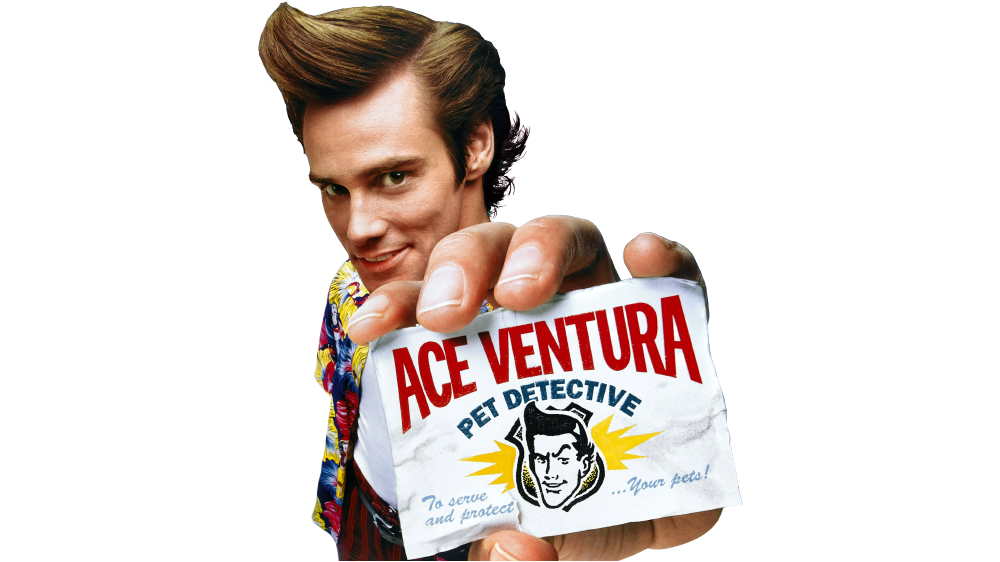
For looking at all four of these types in responses I have chosen Ace Ventura to look at because it has a huge comical aspect that I believe could be elaborated on. The reason Genre and Conventions go together is because various codes and conventions form the different genre characteristics, combining them. The reason why Ace Ventura Pet Detective is such an extensive comedy is because of its constant joke use that was integrated into the scripts. As well as stage directions. Given directly from Ace Ventura himself Jim Carrey who gave across all of this perfectly.
Throughout this it has multiple skits and phrases that have made an impact to what goes on to this very day and age, for example the "like a glove" scene which you can see in the video below, it was something hilarious that changed peoples views on history just through a simple line.
The reason why there are two videos are because these are two movies but they try to mimic the scene but with a slight different way. Looking at use of music in this they go with its not catchy however it is light and up beat, it is in sync with the video, both videos a type of "badass" role model music. it gives the perfect hint to action movies where it has car chase scenes or other action moments that will build up momentum. Finishing off with the costume design and intentions behind a character in a film. As you can see in the second video the man on the left is dressed in full jungle venturing gear which explains this person, he is cautious, smart, not adventurous and maybe new to the jungle reality. Whereas if you look at Ace, the person on the right, he is driving recklessly he is dressed as though he is on vacation. His costume affects what the persons actions might revolve around, from looking at him we might think that he does not have much care, no worries, possibly not the smartest, but still funny of course. Mise en Scene:
Mise en Scene originally was formed in theatre, but in the briefest description it simply means "Staging a scene through artful arrangements of actors, scenery, lighting, and props." basically this means all of what we see, what the audience will see in the film. Achieving a specific intended design in a movie is of course the production designers job, alternatively this is a background fill to an actor, to support their emotion or location in which makes the film what it is. In scenes you might not completely notice but it is noticeable in a way throughout various camera angles on the actors.
Picking up on what was said above, the actor will undergo an excessive amount of makeup to express the emotions of the actor, with of course the actors actually showing their emotions. These days an apparent legend film scholar Barry King elaborated more on his theory through the different types of typical actors, these actors being impersonation, technical or personification. Many people would categorise Jim Carrey as a technical actor because he focuses on details. These details will be of a physical trait. As you study the person you discover more that even through other films and film roles that Jim Carrey has covered that he wil add that hint of over the top to the film, add the comical humour the audience need, take away from bad backgrounds and focus to him.
Narrative Structure:
This story may have a very mislead or confusing story because of its huge comical aspect to it, but it is considered an old movie so its referencing is outdated and goes off of its own humour which means it has its very own narrative structure to tell the story, the locations, the people, the characteristics and of course the whole protagonist/antagonist situation in the story is what concludes to how the narrative structure is formed. When we look at the structure of this movie and the second movie that Jim Carrey starred in has actually been repeated twice, the second movie is a duplicate of what the first movie but it basically has different locations, intro, and characters.
Analyzing the structure, in the very first shot of the film you can see Ace Ventura is walking and the camera pans up to reveal his face and showing that he is carrying a package, then within the editing process its cut to a panning shot of him walking through the street still with the package. Distinctively, this shows that this scene is still one besides the cut, its still the same setting, characters, location, theme etc. Elaborating back to the story though, a detetive that looks to have a speciality in dealing with pets and finding them or what happened to them hence the name pet detective. But with spoiling this, a pet detective has a big case and as he progresses more through the case he finds out that it is actually someone on his side, this is where the twist comes into play with the humiliating ending of finding out about the police chief.
Representation:
Representation of a film can be seen in many directions some bad some good, but the representation of Ace Ventura(film not detective) gets represented as that movie you would laugh at a lot because the main character is clumsy, its about him and his humour and mockery that happens throughout the story. You would never think that at first looking at Ace Ventura in the opening scene he would accomplish great things and become a legend type of figure. In the beginning you feel this sense of misguidance to the actual purpose of the film.
If we look at the representation of the trailer, considering that this was of 1994 you have the impact that this film is a mock of James Bond, or other action films but in fairness it is based around a one of a kind detective that you don't see every day, that you don't see in those action movies where they assassinate someone, he is a pet detective. Even though they used most of their best jokes and gags in the trailer you still get the feeling there is more for the film to offer, as though it was entirely churned out of jokes and gags and innuendoes. Showing a characteristic to Ace would be the fact he shares a personality with animals, making it as though they are one with him, which makes this film interesting and shows how much of a positive impact this can have.
Audience Responses to Media Products First and Third Person Shooters
All games have a very specific standing point of view where they are cast from, a first person shooter is a type of action video game that is played from the first person perspective. First person is a direct view from the subjects eyes, for example all humans are first perspective in their own way because it is how we operate, having this in a video game gives the effect that you are actually present inside the game and playing as yourself. You may not see your body when you look down on most games unless its Halo or Battlefield but you will get a real feel for it through the arms that will appear on your screen.
If you use Battlefield as an example it has different modes, it has Multiplayer, Singleplayer, and integrated into the multiplayer is a type of commanders operation. Single players acts as giving a story where you play through as a specific character and experiencing everything that war has to give, losing friends, gaining enemies, etc. In Singleplayer you simply take on AI so you will be matched against a computer that is skilled on various levels. However Multiplayer acts as a more objective game where your matched with people from all over the world, so it can be extremely bias sometimes. Taking into consideratio audience theories will be acted out more through the combat aspect to a first person shooter, e.g aiming down scopes or through tank barrels.
Third person does have the same intentions as first person but they focus more on what is around you, see your surroundings, see whats on you, whats on your back and all the way around you. Initally so you can see everything that the character has and doesnt have, whereas first person can be seen as being pretty limited to what they can see.
Passive and Active Audiences Passive and active audiences theory is self explanitory it the theory behind a passive and an active audience, a passive audience is where they do not engage in the media, they just accept what happens in it or goes on with it. You will find that a passive audience is easier to manipulate they act as a type of sheep to the media industry, for example the Sun is a great lead to people, they provide content which is sometimes or mostly always false depending how bias you are on them and people just follow it and believe it.
Active audiences on the other hand are very different, they like to take action, react to it, respond, give feedback, give complaints etc. they engage in the product or subject and make them "active" to it. They may make choices based upon new information and form their own opinions with their own knowledge of the subject, for example the game Grand Theft Auto comes to mind when we look at both audiences. Youtubers are a great example for an active audience because they create content around this game, whether its just funny moments or if its updates or opinions on what they want to see on the game.
In the video above is an average GTA YouTuber who brings out content based around this game, it can vary from facts, hidden features, news, etc. in this video he interprets his side of what the game has gave for information and spreads it to YouTube as a whole whether he is wrong or not he is an active audience making responses to it. However the viewers of this video and the majority of the gaming community in GTA will be seen as a passive audience because they do not take action they just go off of what is given to them, this is where you could compare most people to parents who disapprove of this game and take action against it.
Hypodermic Needle Theory
The hypodermic needle theory has been tossed around from time to time but it is mostly known as the theory behind mass media messages getting injected directly into passive audience brains. This has been known to affect the audience directly triggering them to copy a violent act, this theory has had many questions to whether it actually had intentions that were serious enough to harm but it has had a series of limitations. This is also why parents believe that media influences their children, for example a game like Grand Theft Auto to affect their children even though it would be the parents fault for going against the age certificate.
The video that affected the world leaving a huge panic because the audience believe the world had been invaded by aliens. At the time due to it being in 1938 they would of thought this was entirely possible and would take action against it or to not be near it. However in this day and age it would be a more doubted subject leaving less confusion and frustration to the world, this is a great example for hypodermic needle theory because the people who tuned into the broadcast halfway would of been injected directly with the message that martians were invading.
Gratifications Theory
The gratifications theory is an active audience that looks into how and something is done for that specific reason, in media it would be why and how we play the way that we do at video games. This theory doesnt actualy focus on how we are impacted it looks more to how we take this impact and what we do with it, for example how we react to it. For example how people would react to South Park, what would they disagree with? what is so innappropriate? where is the limit to it?
The chart above determines how the gratifications theory works, where the categories are for it. What would self-esteem come under? confidence, achievement etc. In gaming this would look into how this game may help a persons confidence, how they benefit and achieve from it. There are of course other categories such as love and safety, safety is more for privacy and social status whereas love is more friendship and sense of connection to others.
Audience Responses
Since all the theories have been looked at in full detail it is best to move onto the responses, all audiences can respond in different ways whether they are passive or active, in the gaming industry audience responses can be very important and based on many factors, a main factor would be that games are there for leisure and pleasure, to be there after a long day, or just their on the side when you are bored. You can do a variety of things whether its using it to be sociable or just achieve something on your own. Sometimes we use video games to take away from reality, to escape in a way and have our own world of freedom.
Another way we can look at audience responses is through reaction videos, because this is taking a distinctive audience response to a video or subject and making another type of video displaying it to a variety of audiences globally through YouTube, this can show different emotions from the audience it could show rage, anger, sadness, happiness, laughter and much more, just by looking at the thumbnail you can already see the person is showing confusion and maybe disgust.
Audience Interpretation
Focusing more on gender and age in this specific category interpretation can be taken on so many different levels, if we take one of the biggest examples possible, youth and video game violence, it can be interpreted differently because however games may have an age rating an parents to not care for them younger people can interpret in a different way because they do not fuly know right from wrong, for example there has been multiple murders just by children who have apparently been afflicted with video game violence such as Grand Theft Auto.
However if we look at adults at this day and age you rarely see them committing murders due to their activity around video games, this has always been a spike of concern in parents because they can be more easily manipulated within gaming and all different types of media because they will believe a lot more than we do. Moving back to interpretation, religions all interpret differently because some have laws against certain things so when someone from a different religion takes a video game and plays it say killer nuns or something, this will cause quite an impact to the religion and they could interpret it the wrong way. It all depends on how the media or product could impact the person.